

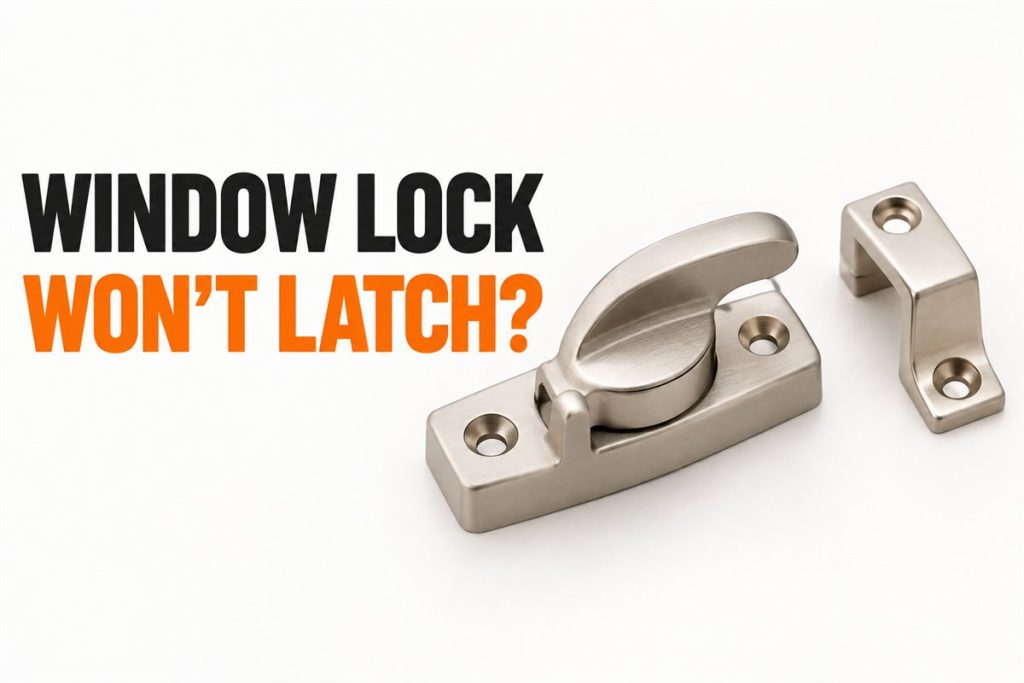
If your window lock won’t latch, stop forcing the handle and check whether the window reaches its normal fully closed position. A latch problem can involve the lock, its matching keeper, or the moving window section. New hardware should be selected only after those observations and the window type are understood.
For Albuquerque homeowners, the useful first step is identifying what is failing to meet: the window itself or the locking parts. This guide covers safe observations from inside, not disassembly, glass work, or alterations to an emergency escape opening.
Window lock won’t latch: identify the window style
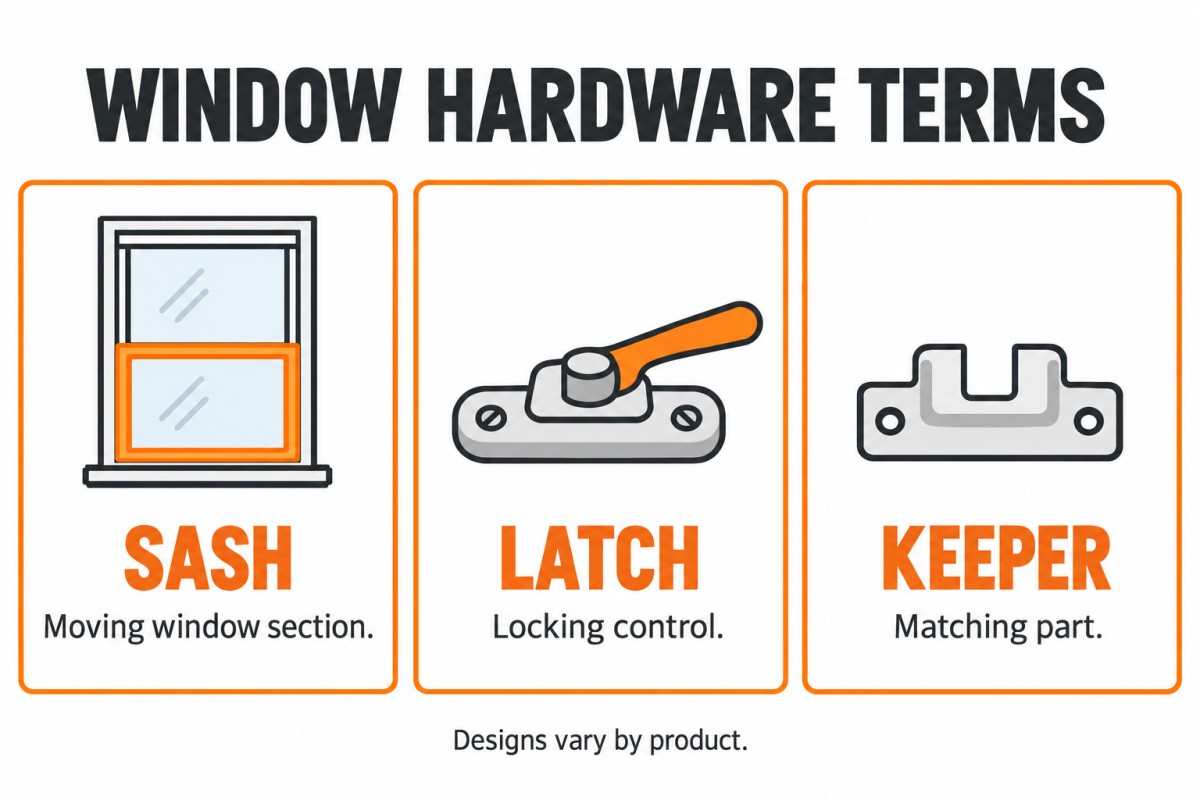
A sliding window moves sideways, a hung window has a vertically moving section, and a casement window opens on hinges. The moving section is often called the sash. Its lock may engage one keeper or operate several locking points, depending on the product.
A latch that suits one style may not fit another even when the finish looks identical. Record the brand and product information from accessible documents or markings. Do not lean out, remove a sash, or use a ladder to collect identification for a first inquiry.
| Observation | What may need assessment | What to record |
|---|---|---|
| Window does not reach its normal closed position | Obstruction, sash movement, or window condition | Where movement stops and any visible gap |
| Window closes but latch misses the keeper | Hardware fit or alignment | Whether the symptom is new or longstanding |
| Handle moves without engaging | Locking mechanism and matching components | Which visible parts respond |
| Lock or keeper appears loose or damaged | Mounting and hardware condition | A safe photograph of the intact installation |
Observe closure before blaming the lock
From a safe interior position, note whether ordinary gentle operation brings the sash fully closed. Look for an obvious loose object or visible debris without pushing fingers into pinch points. Do not force the sash against a screen, frame, or object and do not use the lock handle to pull a poorly fitting window into place.
If the window is difficult to move, damaged, or unstable, stop and report that condition. A lock replacement cannot be assumed to correct a window that will not sit in its intended position. The appropriate service may involve a window professional as well as lock hardware.
Andersen’s support resources separate product identification, parts, service instructions, and care information. They illustrate why the actual window series matters when choosing a replacement component. Use instructions for your own product instead of transferring measurements or procedures from a similar-looking unit.
What a lock-focused assessment should clarify
The keeper is the matching piece that the latch engages. Its location, geometry, and mounting must suit the lock and window. A handle appearing to reach its locked position is not enough evidence that the intended parts have engaged.
Discount Locksmith of Albuquerque lists window lock installation. Describe the existing symptom and confirm whether assessment or replacement is offered for the specific window type. Do not assume a listed installation service includes frame repair, glass replacement, or every proprietary window mechanism.
Replacement fit is more than finish
Ask what establishes compatibility: the product series, latch style, mounting arrangement, and matching keeper may all matter. Avoid buying a universal-looking component before checking. A replacement that requires improvised mounting can introduce a new problem rather than restore the intended operation.
The residential locksmith service page provides related service information. If the appointment also concerns a difficult door lock, keep that scope separate; a window mechanism and a residential deadbolt are different assemblies.
Keep security and emergency use in view
A window that looks closed but does not lock deserves a practical response from the responsible owner or manager. Explain whether you can secure the opening normally. Avoid installing an improvised bar, screw, or keyed device without reviewing the intended use and applicable requirements.
Some windows serve an emergency escape or rescue role. The responsible building professional should verify requirements for that opening and jurisdiction before an alteration. This article does not establish whether a particular window complies, and a new lock should not be assumed suitable simply because it holds the sash shut.
Prepare the service request
- Window style, visible brand, and product information if available.
- Whether it closes fully through ordinary operation.
- Which lock parts move and whether they engage.
- Any damage, recent painting, installation, or earlier adjustment.
- Who owns the opening and can approve hardware changes.
For a rental or managed property, coordinate permission before work starts. Confirm inspection scope, parts, estimate approval, and whether a window specialist may be needed. Use the contact page to provide a concise description rather than sending unnecessary photographs of the home’s access arrangements.
Test the agreed result after service
Illustrative example, not a reported company job: A homeowner says the window closes fully but the latch passes beside its keeper. That description supports checking component fit and alignment before ordering a new lock. If the sash instead stops short of closure, the assessment must include why the window is not reaching its normal position.
At handover, confirm ordinary opening, full closure, and engagement of the intended locking parts. Keep product and service information for future use. The existing home security audit article covers a broader property review; this guide stays focused on a window-latching symptom. The service overview can help coordinate other confirmed work without confusing the two scopes.
A worksheet when your window lock won’t latch
Begin with one window and a short description of its ordinary movement. Identify the room, the window style, and the part that moves. State whether it reaches its normal closed position before you operate the latch. This helps separate a closure complaint from a locking complaint without making changes to either the frame or the hardware.
If a window lock won’t latch, write down whether the symptom is new, occasional, or present since installation. Mention recent painting or other work if you know about it. A report based on the history is more useful than a guess that the latch must simply be worn out. Keep the original condition available for assessment instead of bending parts to test a theory.
Observe from inside and do not place yourself at risk to collect extra information. A window near stairs, furniture, or a height may need particular care even for a photograph. Ask the provider what accessible details are needed. If information cannot be obtained safely, report that limitation and let the appointment address identification.
Use the same terms throughout the request
The sash is the moving section, the latch is the locking control, and the keeper is the matching piece it engages where that design uses one. Your window may have a different arrangement, so describe visible behavior rather than assigning a part name you are unsure about. A photograph of the intact hardware can clarify the discussion when the provider requests it.
Explain whether the handle stops, moves freely, or reaches its usual position without engagement. If a window lock won’t latch but the sash also stops short of closure, include both observations. Do not allow the conversation to become a replacement-lock order before the provider understands that the window itself may need attention.
Compare the proposed work before buying hardware
Ask whether the visit concerns assessment, installation, replacement, or another service. Confirm the window types supported and whether proprietary parts can be identified. A lock installation service should not be assumed to include glass, sash, frame, or balance-system repair. If more than one provider is needed, define which issue each will address.
When a window lock won’t latch, a product that looks similar online may not suit its matching components or mounting. Give the provider the available identification before purchasing parts. Ask how compatibility will be established and what happens if inspection reveals a different problem. This connects the purchase to the actual opening instead of to appearance alone.
| Question | Purpose | Confirmation to keep |
|---|---|---|
| Does the sash close normally? | Separate movement from locking | The observed closure condition |
| Which components should engage? | Identify the intended lock arrangement | The product or hardware identification |
| What is included in the visit? | Distinguish lock work from other window repairs | The approved scope and estimate |
| What is demonstrated afterward? | Verify the agreed result | The completed checks and unresolved items |
Coordinate approval for a managed property
Give the responsible owner or property manager the symptom description and ask who will arrange the assessment. Confirm permission before hardware is altered. A tenant can report a window lock that will not latch without choosing a replacement independently. The person approving the work should understand the product recommendation and any conditions that remain outside the scope.
Where an opening may have an emergency escape or rescue function, have the responsible professional review the applicable requirements before alteration. Do not assume that holding a sash shut is the only objective. A proposed device must be considered in relation to the opening and its intended use, not just its ability to prevent movement.
Four comparisons that help explain the symptom
1. Closure stops before the latch is operated
If ordinary gentle movement does not fully close the sash, say so before discussing the handle. Avoid using the locking control to force closure. The relevant question is why the window is not reaching its normal position. A provider may need a window specialist’s assessment before a hardware choice can be made confidently.
2. The sash closes but the latch misses
This report concerns the relationship between the locking parts once the window is closed. Do not move the keeper or add new mounting holes to experiment. Preserve a photograph or description of the intact condition. The provider can then consider fit and alignment without first reconstructing where components were positioned before an attempted adjustment.
3. The handle moves without the intended result
If your window lock won’t latch even though the handle reaches its usual position, explain what the visible parts do. Handle orientation alone should not be treated as proof of engagement. Ask what ordinary test will demonstrate the intended function after service and whether any other component needs attention before that test can be meaningful.
4. The complaint is intermittent
Record whether unsuccessful attempts coincide with incomplete closure or another observed condition. Do not manufacture a pattern by repeating the operation forcefully. A short history of when the window lock won’t latch helps the provider assess the complaint, while an unexplained series of adjustments can conceal what originally changed.
Make the handover specific to the window
Ask for a record of the product identified, the work approved, and the parts installed or retained. Keep it with the property maintenance information. If a sash or frame issue remains, have that limitation recorded separately rather than accepting a broad statement that the entire window was repaired when only its lock hardware was addressed.
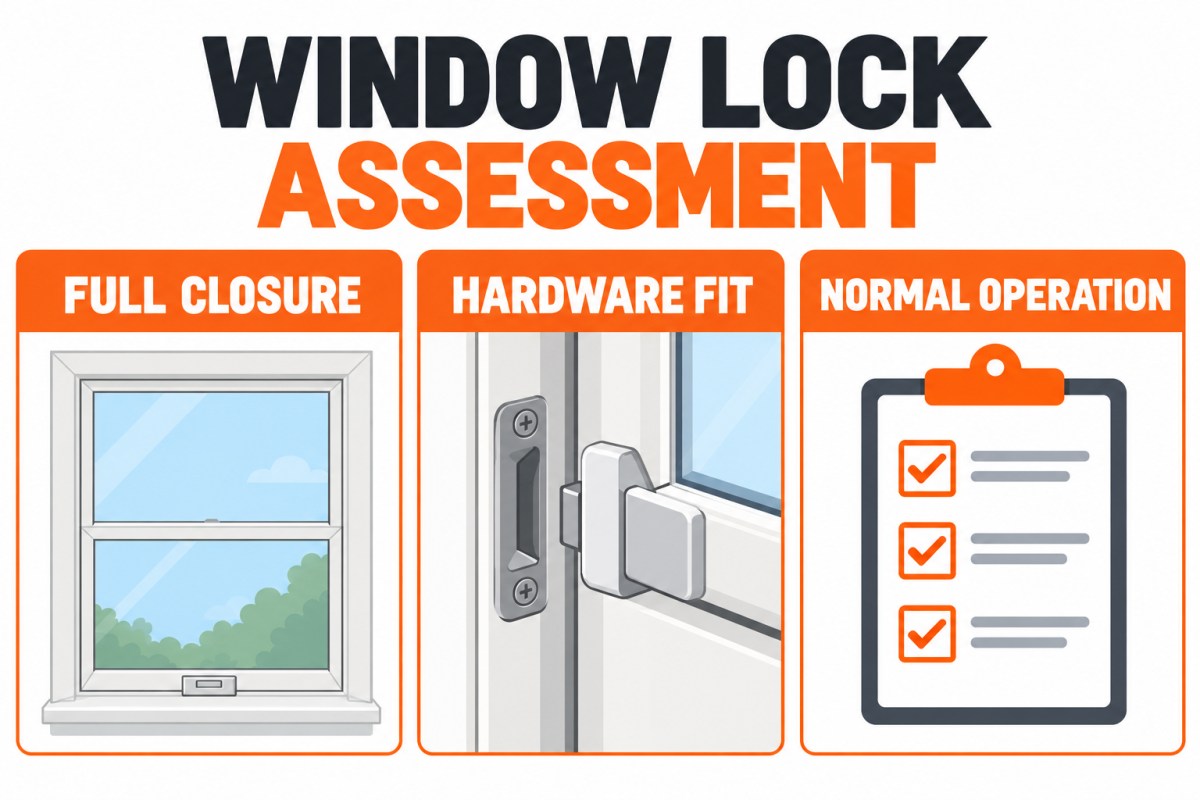
Review the normal operation included in the appointment with the provider. The result should be explained in terms of closure and engagement, not simply the presence of a new handle. Ask questions if ordinary use still requires unusual pressure or repeated attempts. Keep another safe access or operating arrangement as appropriate while unresolved issues are addressed by the responsible person.
If the window lock won’t latch again, report the recurrence with the service record and the conditions observed. Avoid bending hardware or adding an improvised restraint before speaking with the provider. Accurate follow-up information gives the next assessment a starting point and helps distinguish a repeated complaint from a new condition elsewhere in the window.
Store photographs and records sensibly. A maintenance file does not need a public map of every opening in the home or images showing unrelated private documents. Keep identification and service details available to the responsible owner or manager, while sharing only the information needed for the particular appointment.
Frequently Asked Questions
If my window lock won’t latch, can handle position prove it is secure?Not necessarily. The intended latch and keeper must actually engage. Report what the visible parts do and whether the sash reaches its normal closed position. Do not rely only on handle orientation, and avoid repeated forceful tests that could damage the hardware or surrounding window components. |
Can I use the lock to pull the window closed?Do not force the latch handle to compensate for a window that does not close normally. Describe the movement problem separately from lock engagement. A sash or frame issue may need assessment before suitable locking operation can be restored, and changing the lock alone may leave that condition unresolved. |
Will a universal replacement fix a window lock that won’t latch?No. Window style, product series, latch geometry, mounting, and the matching keeper can affect fit. Similar finishes are not proof of compatibility. Provide the available product details and confirm the proposed component before purchasing it or approving installation that would require altering the existing window. |
What if the window is painted shut or difficult to move?Report that condition and avoid forcing the sash or using lock hardware as leverage. The work may extend beyond lock replacement and require a window professional. Explain recent painting or other changes so the service provider can distinguish a movement problem from a latch that misses its matching component. |
Should I remove the sash to find the product label?Do not disassemble a window or lean outside just to prepare an inquiry. Check accessible documents and markings safely from inside. If identification is unavailable, say so and ask what information the provider needs. A photograph of intact hardware may help when taken without a ladder or risky position. |
Can a new lock affect an emergency escape window?An alteration can affect how an opening is used, so the responsible building professional should verify applicable requirements before work begins. This article is not a compliance assessment. Do not add improvised restraints or assume a device is suitable solely because it prevents the window from moving. |
Does the company repair window glass or frames?The service reviewed for this article is window lock installation. Confirm the exact scope directly, including whether existing hardware can be assessed and which window types are supported. Do not infer glass, frame, or proprietary mechanism repair from a general lock service listing without checking first. |
Should a tenant arrange replacement without telling management?Coordinate with the responsible owner or property manager and follow the approval requirements that apply to the property. A latch complaint does not by itself authorize a hardware alteration. Provide the symptom and ask who will arrange assessment, approve parts, and keep the completed service record. |
What if my window lock won’t latch only occasionally?Record when it happens and whether the sash position or ordinary closing movement differs between successful and unsuccessful attempts. An intermittent symptom is useful information, not proof that the hardware is sound. Avoid bending parts or moving the keeper through trial and error before an appropriate assessment. |
What should be checked after installation?Confirm the agreed normal opening, full closure, and actual latch engagement for that window. Ask about any remaining sash or frame issue and retain the product details and service record. The completed work should be explained in terms of intended operation rather than simply showing that a new handle was fitted. |
Final Thoughts
When a window lock won’t latch, establish whether the window closes correctly and whether its matching hardware engages. A product-specific assessment helps you choose suitable work without forcing or improvising the opening.
Call Discount Locksmith of Albuquerque at (505) 210-8802 or contact the team to confirm the service scope, compatibility, and current availability.