

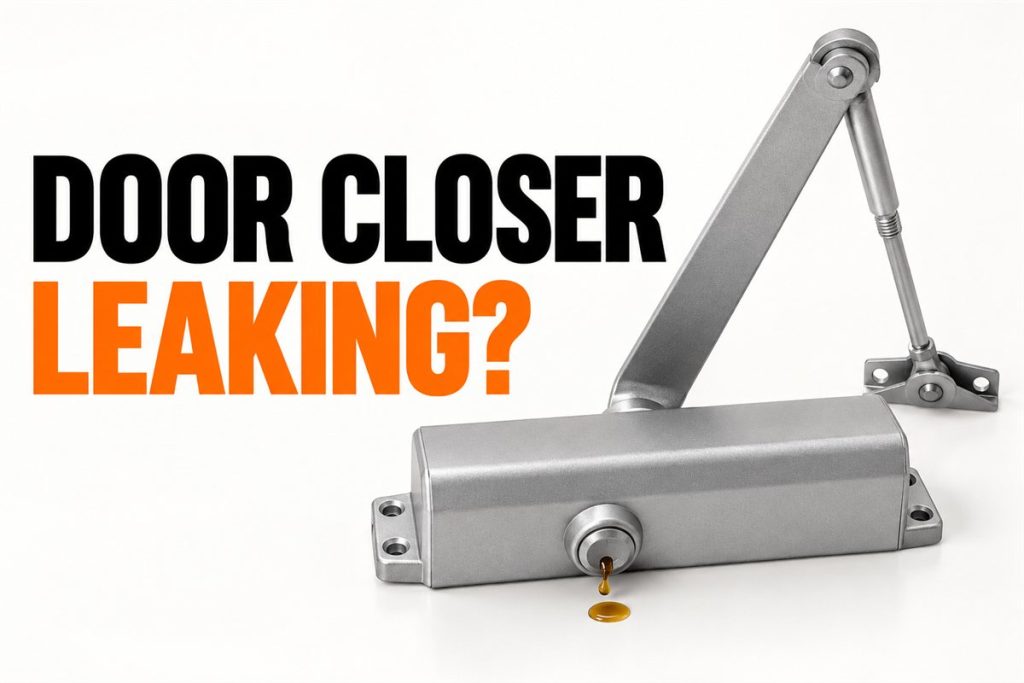
A door closer leaking oil deserves prompt inspection, especially if the door has become uncontrolled or fails to close normally. Keep people clear of the swing and report the leak and operating change together. Do not open or refill the closer, and do not treat a speed adjustment as a repair for lost fluid.
This guide helps Albuquerque business managers prepare a service request for an existing closer. It does not provide valve settings or establish code compliance for a particular commercial entrance.
Door closer leaking oil: record the location and behavior
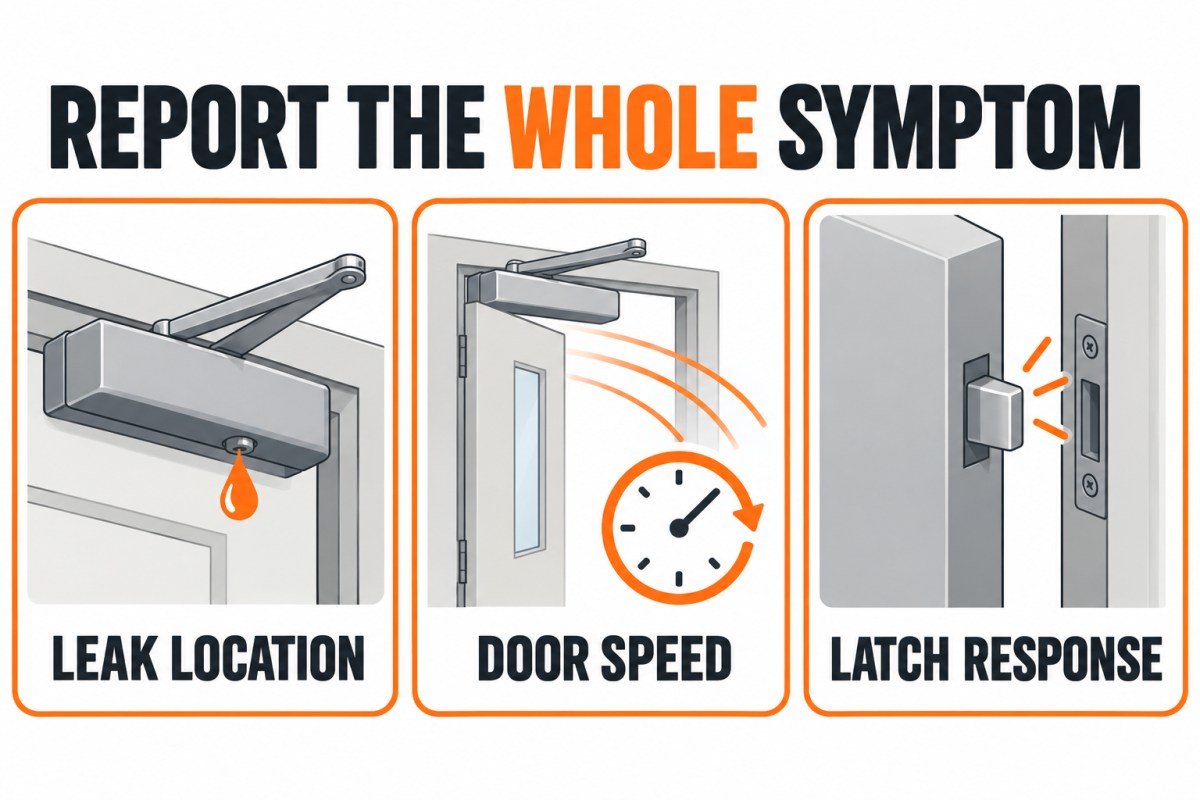
Note where the residue appears: around the closer body, near a valve, on the arm, or on the floor beneath the opening. A photograph can help a provider assess what needs inspection, but take it from a safe position without climbing or touching moving parts.
Describe whether the door closes faster than before, bangs near the latch, stops short, or changes behavior between cycles. Those observations are more useful than simply requesting more oil. An appropriate inspection should consider the closer and its installation along with the door’s intended operation.
| Observed condition | What to communicate | Manager’s next step |
|---|---|---|
| Fresh oily residue on the closer body | Location and when it first appeared | Request product-specific assessment |
| Leak plus unusually fast closing | Loss of controlled movement | Keep people clear and coordinate safe use |
| Door no longer latches reliably | Closure and security are affected | Include latch performance in the service brief |
| Loose arm or abnormal mounting movement | Installation condition may also need attention | Avoid adjustments or disassembly |
Why refilling is not a normal maintenance shortcut
A hydraulic closer’s internal condition and approved service procedure depend on its design. Adding fluid does not establish that a leak has been repaired or that the closer will control the door. Do not remove a plug, open the body, or try to reseal the unit on the doorway.
For LCN equipment specifically, Allegion’s closer-fluid guidance states that field refilling is not permitted. The manufacturer’s door closer FAQ also addresses leakage and the hazards of tampering. Use the instructions for the actual installed product rather than transferring a procedure between brands.
A provider may recommend a suitable replacement or an approved service route after identifying the product and condition. Ask what findings support that choice and whether mounting, arm condition, or other door issues affect the completed work.
Coordinate the doorway while waiting for service
Notify the building manager and the person responsible for customer or staff access. Address any residue on the walking surface through the site’s normal safety process. Keep people away from an uncontrolled swing without obstructing required exit access or creating an improvised restraint.
Do not wedge a required closing door open, detach the closer arm, or add another lock as a temporary response. Fire-rated doors and accessible routes may have particular requirements. The responsible building professional should verify what applies to that opening and jurisdiction.
Installation service versus existing closer assessment
Discount Locksmith of Albuquerque lists automatic door closer installation. Explain that the existing unit is leaking and ask whether inspection, replacement, or another service arrangement is available for its make and model. A listed installation service does not imply every closer is repairable.
If the door has a separate locking complaint, include it in the brief. The existing storefront door repair article discusses hard-to-lock doors. Here the trigger is visible closer leakage; avoid assuming a new closer alone will resolve every frame, hinge, or latch problem.
Information that supports a useful estimate
- Door location and the person authorized to approve work.
- Closer brand and model from safely visible information.
- Photographs of residue and the intact installation if requested.
- When speed, latching, or opening effort changed.
- Recent closer adjustments or door, frame, and ventilation work.
Ask how the proposed product suits the door, what existing components remain, and whether parts availability affects the appointment. Confirm estimate approval before additional work. A finish or body size that looks similar is not enough to establish replacement compatibility.
Check the whole closing cycle afterward
Illustrative example, not a company job: A manager sees new residue and notices the entrance closes much faster than last week. The request should describe both changes and ask for a product assessment. Cleaning the residue or slowing one adjustment without addressing the cause would not establish a completed repair.
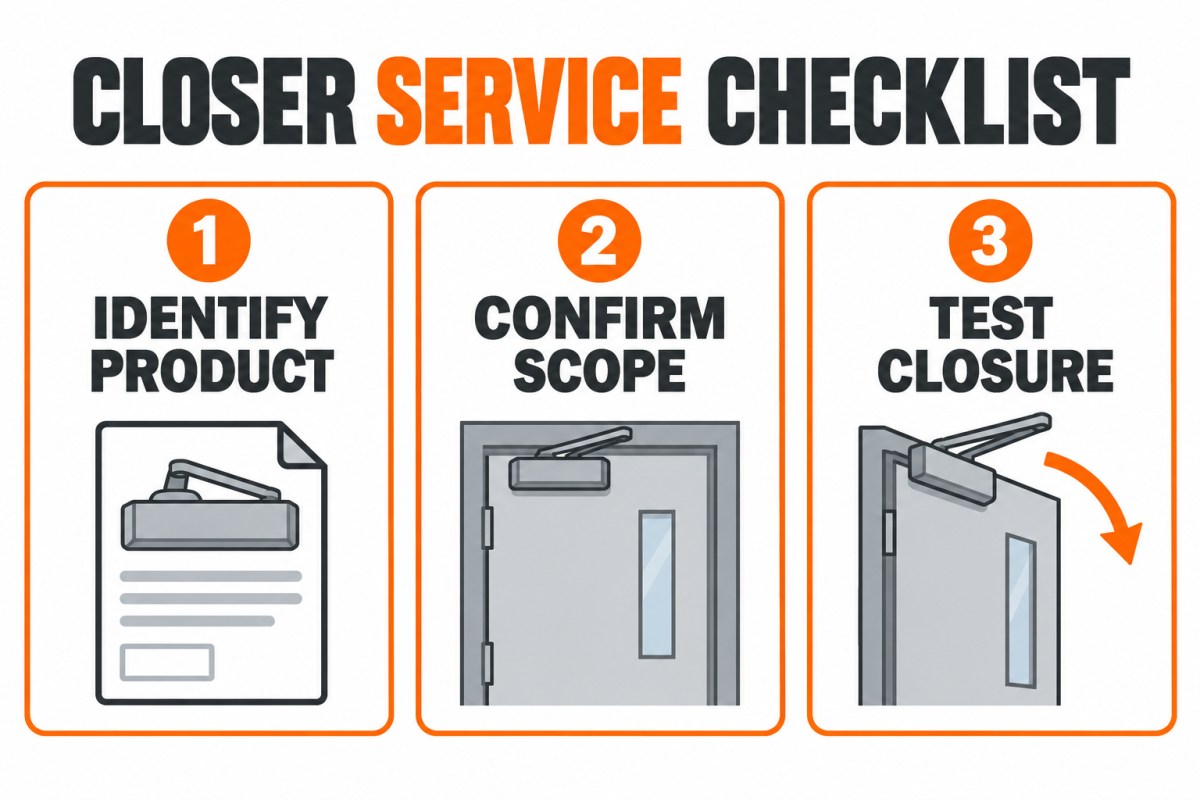
At handover, ask for checks of the agreed closing and latching functions and a clear explanation of any remaining issue. Retain the service record and product instructions. The commercial locksmith service information and contact page provide the route to confirm scope and support for an Albuquerque property.
A reporting worksheet for a door closer leaking oil
Give the opening a clear description that staff and the provider can recognize without a photograph of the whole building. Identify the entrance, the side on which the closer is visible, and the normal use of the door. Note whether it serves customers, staff, or deliveries. Those facts help the responsible manager explain the practical effect of the symptom without guessing which replacement product is needed.
When a door closer leaking oil is reported, record when the residue was first noticed and whether it has appeared again. Keep that observation separate from the closing-speed complaint. If there is no known change in movement, say so. If staff noticed faster closing before seeing residue, preserve that sequence. The history helps an inspection start with the actual condition rather than a general assumption about every stain.
Use photographs only when they can be taken safely from the floor and outside the swing. Do not stand on furniture or hold the door against the closer to obtain an image. Ask the provider which visible details would help identify the product. A clear picture of accessible markings and the intact installation may be more useful than several close-ups that omit the mounting context.
Keep the staff report consistent
One person should collect the known observations and communicate changes. Multiple reports can otherwise describe the same door as too fast, too slow, and broken without identifying when each behavior occurred. Ask staff to report ordinary use, not to repeatedly demonstrate the problem. Keep visitors out of an uncontrolled swing and follow the building manager’s interim arrangements.
If someone adjusted the closer before the leak was reported, record that fact without blaming the person or guessing the effect. Do not ask another employee to reproduce the adjustment. The technician needs the current product condition and a reliable history, not a sequence of additional changes made while trying to improve the symptom.
Define the scope before approving a replacement
An assessment, replacement closer, new arm, and work on the door assembly are different estimate items. Ask what the proposal includes and what existing components are expected to remain. A new body that resembles the old unit is not enough information to establish a complete installation plan. The provider should identify how the selected product suits the actual opening.
For a door closer leaking oil, ask what the inspection found and how the proposed work addresses it. If the recommendation also includes hinges, mounting, or latching work, have those items explained separately. This makes the estimate easier to review and makes the final test clearer. It also avoids assuming that one new component settles every complaint about the entrance.
| Decision | Question before approval | Useful handover detail |
|---|---|---|
| Product selection | How was suitability for this opening established? | The installed product identification |
| Existing components | Which arm and mounting parts remain? | What was retained and what was replaced |
| Related work | Are door, frame, or latch issues separate? | Completed and unresolved items |
| Operational check | What closing and latching functions are included? | The result demonstrated at handover |
Coordinate with the people responsible for the opening
A tenant, store manager, property owner, and maintenance contractor may have different responsibilities. Confirm who can approve work and who should receive the service record. If the door has a special role in the building, the responsible professional needs to review any requirements before an alteration. Do not treat an ordinary service quote as a compliance certification unless that specific work has been agreed and performed.
Plan access for the appointment without improvising changes to the doorway. Explain delivery times, customer traffic, and any established building procedures that affect the work. Let the provider and manager agree on a suitable arrangement. The aim is to give the technician a clear work area while occupants retain the access and exit arrangements required for the property.
Three comparisons when a door closer is leaking oil
1. Residue without an observed movement change
A manager sees residue but has no reliable report of altered closing. The useful request is to identify the source and assess the unit, not to promise that it needs only cleaning. Staff should continue reporting any change through the agreed process. Absence of a known movement complaint does not establish the cause or condition of an unidentified closer.
2. Residue and a door that closes faster
If a door closer leaking oil coincides with faster movement, report both observations together. The service brief should include the effect on people using the entrance and the interim arrangements already coordinated. Do not reduce the request to a speed adjustment or assume that a quieter cycle would establish that the leak itself had been addressed.
3. A new closer with an existing latch complaint
A replacement may be appropriate for one condition while another remains. If the door previously failed to latch, ask whether that complaint is included in the assessment. A final demonstration should distinguish controlled movement from reliable engagement of the intended latch. Have any remaining door or frame condition recorded so it does not disappear from the maintenance plan.
What to keep in the maintenance record
Retain the initial report, approved scope, installed product information, and completed checks. Record the date and the person who approved the work. Keep any instructions provided for that installation with the building maintenance records. Do not substitute an old generic closer instruction sheet for the product actually installed on the opening.
Ask what observations staff should report afterward. Recurring residue, changed speed, unusual movement, or failure to latch should go through the responsible manager rather than trigger another undocumented adjustment. If a door closer leaking oil returns as a complaint, the earlier record helps the provider see what was done and what conditions have changed.
Document limitations in plain language. A record might identify that closer replacement was completed while a separate frame issue requires follow-up. That is more useful than a note saying everything fixed when the full assembly was outside the scope. A clear division of work supports the next decision without requiring employees to infer what the technician intended.
Finally, review the entrance through its normal use after the agreed work. Keep observation and maintenance separate: staff can report behavior, while adjustments and repairs follow the approved product and building process. This gives a door closer leaking oil a defined response from first report through completion, instead of a repeating cycle of cleaning, guessing, and unrecorded changes.
For a door closer leaking oil, keep the appointment decision tied to the actual opening and its responsible manager. Ask who will receive the final findings and who will arrange any separate follow-up. A door closer leaking oil should not become an unresolved note passed between shifts; record the agreed action, the person approving it, and the result demonstrated when service is complete.
Frequently Asked Questions
Can I refill a door closer leaking oil?Do not refill an unidentified closer or open its body. Manufacturer procedures vary, and LCN specifically does not permit field refilling. Adding fluid does not establish that a leak is fixed. Have the actual product identified and ask the provider to explain the approved service or replacement route. |
Does every oil mark prove a current closer leak?An inspection may be needed to identify the residue and its source. Record where it appears and whether it is fresh or recurring, and report any change in door behavior. Avoid making a final diagnosis from a stain alone or cleaning away all context before the provider can assess it. |
Should I adjust a door closer leaking oil?Do not treat an adjustment as proof that fluid loss has been repaired. A temporary change in behavior can leave the cause unresolved. Preserve information about earlier adjustments and ask a qualified provider to assess the installed closer using the correct product guidance and the door conditions. |
Is detaching the arm a suitable temporary fix?Do not remove or loosen closer components as a general response. The door may lose controlled operation or a required closing function. Coordinate interim arrangements with the responsible building manager and maintain necessary exit access while a suitable product and doorway assessment is arranged. |
Can we keep using the entrance normally?The answer depends on the observed condition and the role of the doorway. If movement is uncontrolled, keep people out of the swing and coordinate safe access with the building manager. Confirm interim arrangements directly rather than assuming a small-looking leak means the door can continue unchanged. |
Will replacing the closer fix a latch problem too?Not automatically. Latch resistance, hinges, mounting, and door or frame condition can affect the result. Include unreliable latching in the request and ask what will be inspected. The estimate should explain which conditions the proposed work addresses and what remains outside the agreed scope. |
Can I order a replacement that looks the same?Appearance alone does not establish suitability. Door characteristics, mounting, use, and applicable requirements can affect selection. Give the provider visible product information and ask how the proposed replacement fits the installation. Confirm which arm and mounting components are included rather than assuming all existing parts can remain. |
What if the closer is on a fire-rated opening?Have the responsible building professional review the opening and applicable requirements before alterations. This article is not a fire-door inspection or compliance finding. Do not wedge the door open or improvise a restraint to manage the symptom; coordinate an appropriate interim plan and qualified service. |
What history helps assess a door closer leaking oil?Report known adjustments, leaks, replacement parts, and recent door or frame work with approximate dates. Avoid guessing at valve settings or trying to reconstruct them through trial and error. A clear history helps distinguish the original condition from changes introduced while staff attempted to manage it. |
What records should the business keep after service?Keep the product identification, approved work, final operational checks, and instructions supplied for that installation. Note any remaining issues and who is responsible for them. Report recurring residue or altered movement with dates and conditions instead of allowing repeated undocumented adjustments to become the normal maintenance response. |
Final Thoughts
A door closer leaking oil needs a product-specific service decision and a check of controlled closing and latching. Document the symptom, avoid refilling, and coordinate the work with the responsible building manager.
Call Discount Locksmith of Albuquerque at (505) 210-8802 or contact the team to confirm the service scope, compatibility, and current availability.